

CES 2026, the world’s largest technology trade show, has come to a close—and this year, one theme stood out above all others: robots. From humanoids and quadrupeds to sports and healthcare applications, robotics was everywhere on the show floor, signaling that the era of Physical AI—where AI and robotics come together in the real world—is quickly taking shape.
With Jae-bum Park, Senior Researcher at POSCO Research Institute, we look at what CES 2026 revealed about the future of robotics and where POSCO Group’s strengths could create new opportunities in this fast-growing industry.

Powering the Energy Transition: Robots Were Everywhere at CES 2026
At this year’s CES, robots were impossible to miss. Even in booths hosted by companies not traditionally associated with robotics, robot-related technologies appeared throughout the exhibition. The message was clear: AI-powered robots are moving beyond demonstrations and entering everyday life and industrial environments.
One of the most talked-about exhibits was Atlas, the humanoid robot presented by Boston Dynamics, Hyundai Motor Group’s robotics affiliate. Equipped with 56 degrees of freedom (DoF), Atlas demonstrated highly flexible movement and the ability to handle heavy-duty tasks involving loads of more than 50 kilograms—offering a glimpse of its potential in real industrial settings.
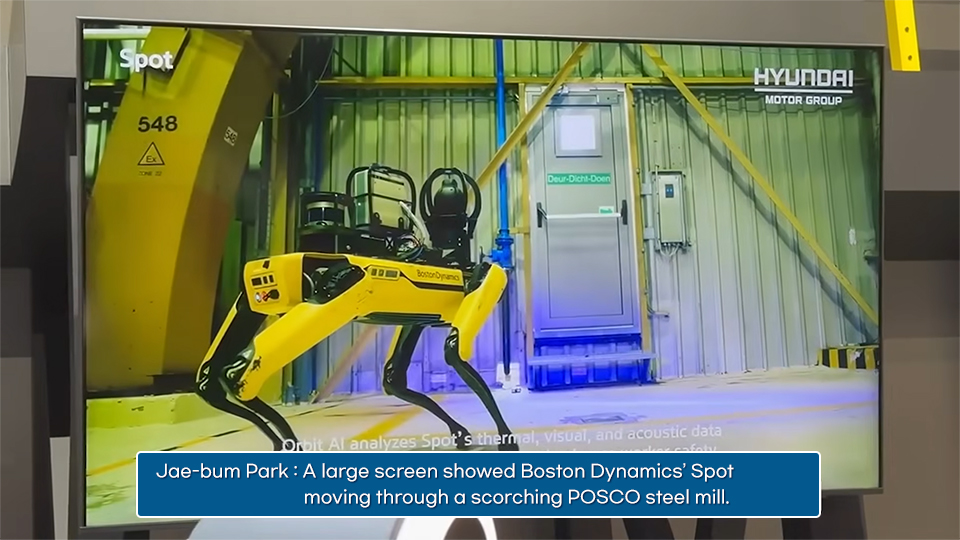
The exhibition also introduced a collaboration case involving POSCO and Boston Dynamics. On screen, Spot, Boston Dynamics’ quadruped robot, was shown moving through high-temperature facilities at a POSCO steelworks. In a noisy and heat-intensive environment, Spot was able to detect gas leaks and carry out precise inspections of equipment and infrastructure. The scene offered a compelling look at how robots are evolving from crowd-pleasing exhibits into reliable co-workers on industrial sites.
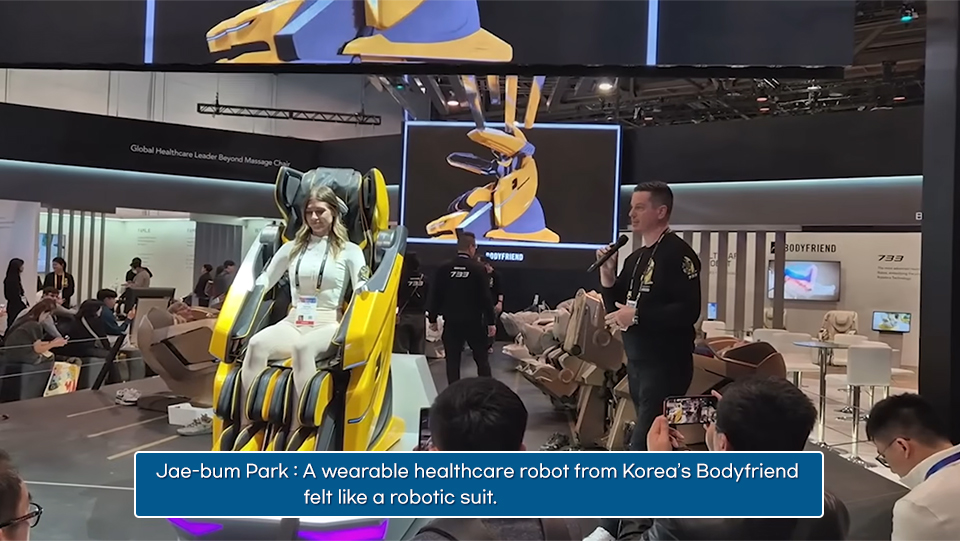
Another exhibit that drew attention came from Korean company Bodyfriend, which showcased a massage chair designed to feel almost like wearing a robotic suit. Its wearable AI healthcare robot, with independently moving arms and legs, attracted strong interest for its ability to analyze and stretch the user’s joints.
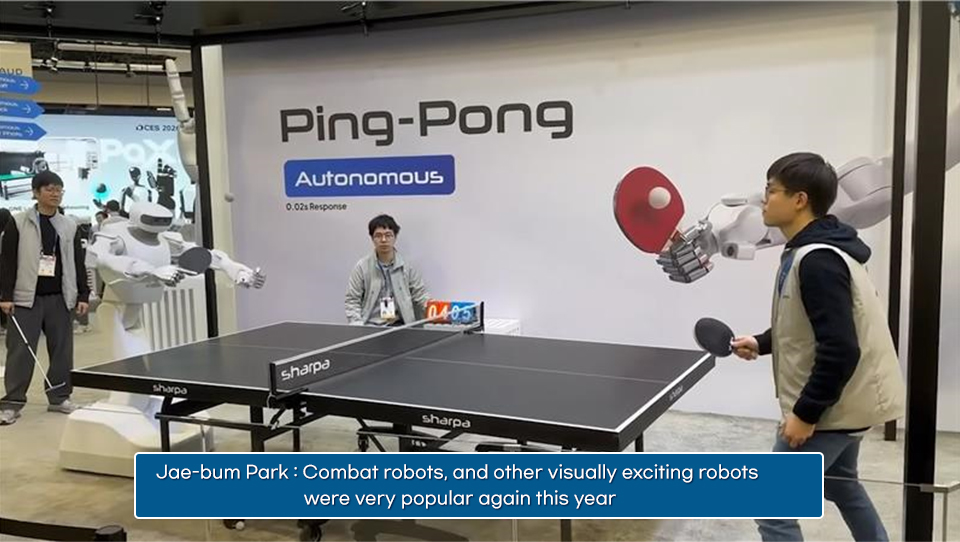
Robots were also making an impact in sports. Table tennis robots and combat robots once again proved popular with visitors, while sports robots introduced by Chinese companies such as Unitree and others showed just how far the technology has advanced. Some were able to analyze an opponent’s movements and track the trajectory of a ball in real time, providing highly detailed coaching.
Degrees of Freedom: What Makes Robot Movement More Sophisticated
As CES 2026 made clear, robot movement is becoming increasingly refined as technology advances. One term that many robotics companies use when discussing precision and flexibility is DoF, or Degree of Freedom. In simple terms, DoF refers to the number of joint axes a robot can move or control.

Generally speaking, the higher the DoF, the more independently controllable joints a robot has. This is particularly important for humanoid robots, which are expected to move in ways that resemble the human body. Industrial robot arms used in automated manufacturing processes typically have around 6 DoF, while humanoid robots usually range from 30 to 60 DoF. With 56 DoF, Boston Dynamics’ Atlas is close to the level required to mimic full-body human joint movement.
That said, increasing DoF also means adding more components such as motors, reducers, and sensors. In other words, the more sophisticated the movement, the higher the production cost. That is why robotics companies carefully design and allocate DoF based on each robot’s purpose and application.
Why Actuators Matter
An actuator is the drive unit that physically moves a robot’s joints. It can be understood as a complete joint system that combines a motor, reducer, sensor, and control circuit.

A motor on its own produces rotational motion. But for a robot arm to extend in a straight line or bend with precision, rotational movement alone is not enough. By integrating gears and electronic controls, an actuator enables more complex forms of motion, including both rotational and linear movement. If a motor is like a muscle cell, an actuator is the complete muscular joint that allows a limb to move in a controlled way.
For a humanoid robot with 56 DoF, roughly 56 precision actuators are needed.
Why Hyper NO Matters in the Age of Robotics
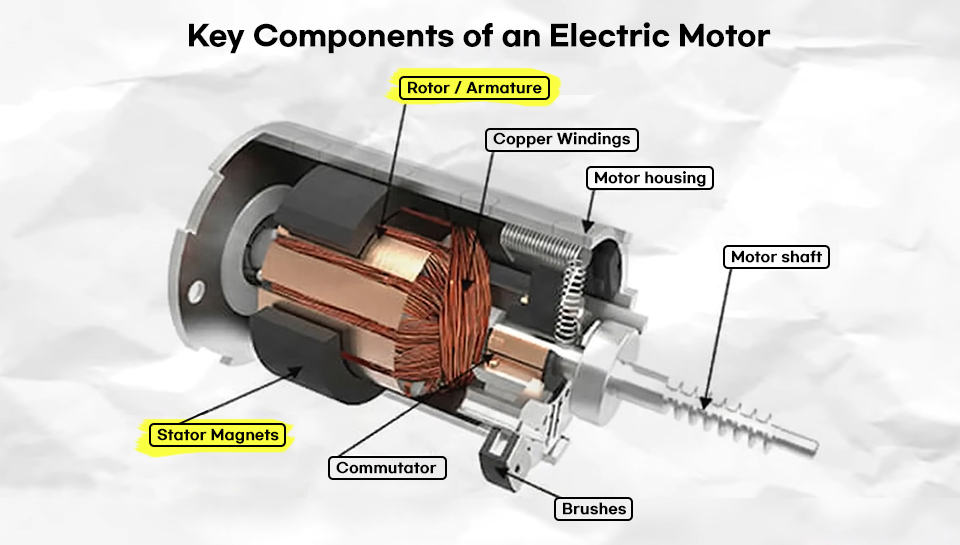
Electrical steel is also a critical material in motor manufacturing, accounting for roughly 20% to 30% of total motor production cost. This is especially important in robot motors, which must generate high output despite their compact size. In many cases, the performance of the electrical steel used inside the motor directly affects the motor’s overall efficiency and output.
To achieve better performance, the steel sheet must be made as thin as possible. If it is too thick, eddy currents* can form inside the material, causing energy loss in the form of heat.
*Eddy currents are swirling electric currents generated by electromagnetic induction when the magnetic field around a conductor changes rapidly.
POSCO’s high-performance electrical steel, Hyper NO, is designed to maximize magnetic performance even at extremely thin, paper-like thicknesses. The thinner electrical steel becomes, the more difficult it is to manufacture. In fact, only about five to six steelmakers worldwide, including POSCO, are capable of stably mass-producing electrical steel at the Hyper NO level. That makes it a strategic material with high technological barriers to entry—and an increasingly important one in the era of robotics and electrification.
Energy and Materials Will Help Power the Humanoid Robot Era
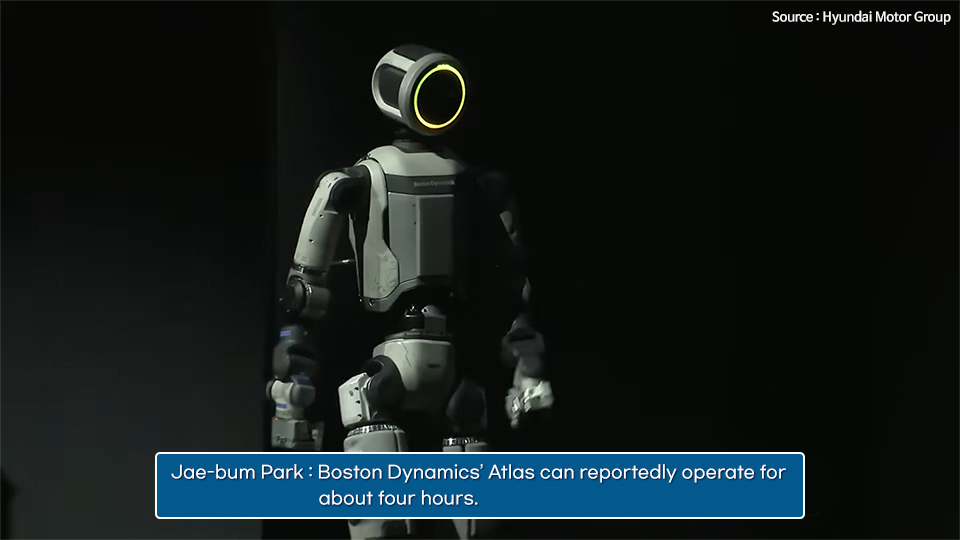
No matter how advanced a robot’s movement may be, it cannot function properly without enough energy. Today, humanoid robots typically operate continuously for only about two to four hours, making battery technology one of the biggest limiting factors in the industry.
At CES 2026, swappable battery systems emerged as a notable trend aimed at addressing that limitation. Boston Dynamics’ Atlas, for example, is known to operate continuously for around four hours, and it is even equipped with a function that allows it to replace its own battery when power runs low.
Tesla CEO Elon Musk recently predicted that there could be 10 billion humanoid robots within 25 years. If production reaches that scale, demand for actuators would rise into the hundreds of billions, making growth in demand for high-performance electrical steel almost inevitable. Once replacement demand is taken into account, the number of batteries required could also reach into the tens of billions.
This would also drive a sharp increase in demand for lithium, one of the key raw materials used in batteries. From this perspective, POSCO Group’s high-performance electrical steel technology and lithium assets are likely to draw growing attention as the robotics market continues to expand.
As robotics moves closer to real-world adoption, the future of the industry will depend not only on software and AI, but also on the materials and energy technologies that make advanced movement possible. In that future, POSCO Group is well positioned to play an important role.