
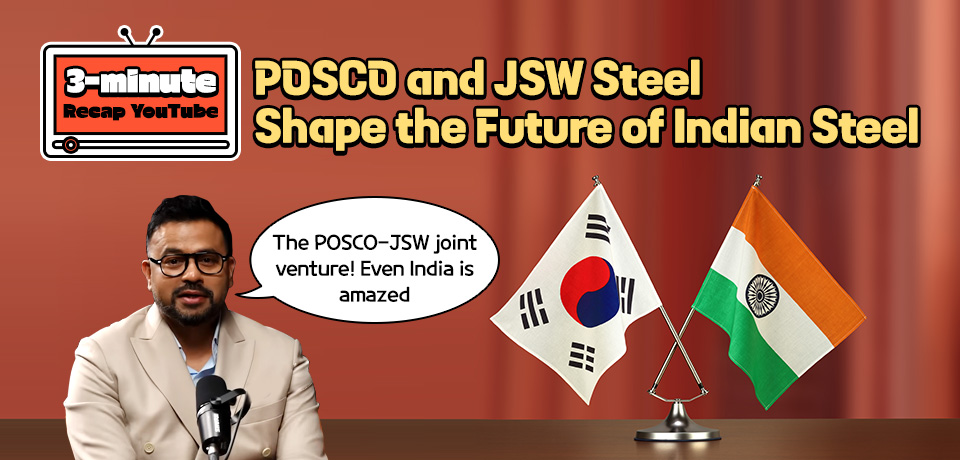
Exciting news has recently arrived. POSCO has signed a Joint Venture Agreement (JVA) with JSW Steel, India’s leading steelmaker, to construct an integrated steel mill. Grounded in a robust partnership, this collaboration aims to target high-profit markets in India and further strengthen the global steel supply chain. How did POSCO and JSW Steel come to join hands? Here is the behind-the-scenes story of this monumental partnership.
POSCO Signs Joint Venture Agreement with India’s Leading Steelmaker, JSW Steel
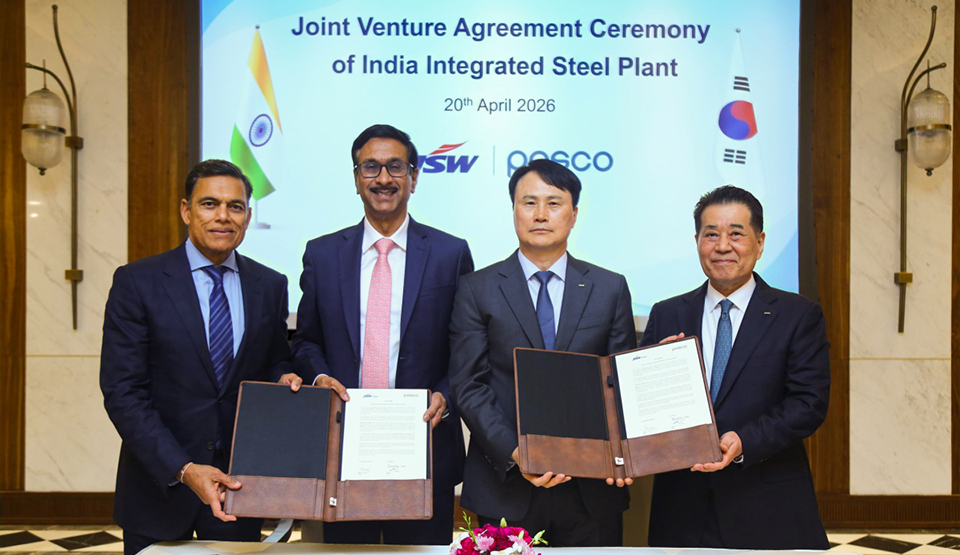
▲ POSCO signed a Joint Venture Agreement with JSW Steel, India’s No. 1 steelmaker, on the 20th to build an integrated steel mill. (From right) CHANG In Hwa, CEO of POSCO HOLDINGS; LEE Hee Guen, President of POSCO; Jayant Acharya, CEO of JSW Steel; and Sajjan Jindal, Chairman of JSW Group.
POSCO has officially embarked on constructing an integrated steel mill in India—a high-growth market with a population of 1.46 billion—by signing a Joint Venture Agreement (JVA)* with JSW Steel, the nation’s top steelmaker. The joint venture will be established on an equal partnership basis, with both companies holding a 50% stake each.
The new blast furnace-based integrated steel mill** will feature a comprehensive production system covering both upstream and downstream processes—including ironmaking, steelmaking, hot rolling, and cold rolling/galvanizing—capable of producing high-value-added premium steel. With an annual crude steel capacity of 6 million tons, the plant will be located in the state of Odisha,
securing a site adjacent to iron ore mines with excellent logistics, power, and infrastructure. Construction is projected to take 48 months from groundbreaking, with completion targeted for 2031.
* Joint Venture Agreement (JVA): A form of direct investment where a company partners with local capital to jointly operate and manage a business.
* Integrated Steel Mill: A steel plant equipped with all production stages, including ironmaking (producing molten iron), steelmaking (removing impurities), and rolling (manufacturing finished steel products).
A Perfect Match: How POSCO and JSW Group Share a Common DNA
In India, JSW Group enjoys a level of public recognition and influence comparable to POSCO in Korea, operating across a diverse range of business sectors. Just as POSCO runs professional football clubs like the Pohang Steelers and Jeonnam Dragons, JSW Group boasts immense financial power and cultural influence, even owning the Delhi Capitals, a team in India’s highly popular professional cricket league.
Notably, a special bond forged during a time of crisis connects the two companies. In 2022, Typhoon Hinnamnor caused severe flooding at Pohang Works, submerging key facilities. At that critical juncture, JSW Group generously offered POSCO a set of equipment they had ordered for their own hot rolling mill. This noble gesture significantly expedited the restoration of Pohang’s No. 2 Hot Rolling Mill, serving as a cornerstone for deep mutual trust between the two groups.
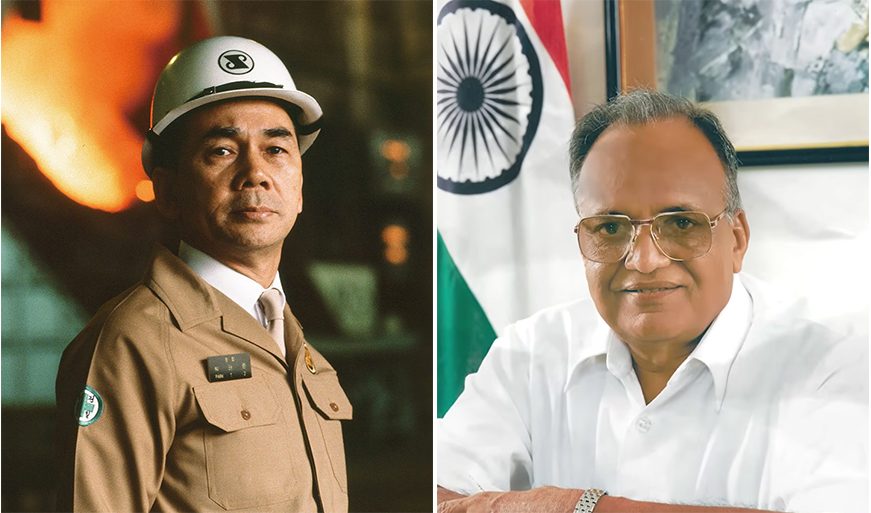
▲ (From left) POSCO Founder PARK Tae Joon, JSW Group Founder O.P. Jindal (Photo credit: POSCO group Newsroom DB, Wikimedia)
Beyond a mere business partnership, POSCO and JSW Group share deep-rooted commonalities in their founding spirits and management philosophies. JSW Group’s founder, Om Prakash Jindal (O.P. Jindal), dedicated his life to India’s industrialization. This closely mirrors the philosophy of Jecheol-boguk (제철보국, “Patriotism through Steelmaking”) championed by POSCO’s late founder and Honorary Chairman, PARK Tae Joon, which emphasizes serving the nation by producing high-quality steel. O.P. Jindal’s famous vision, “Where others saw walls, he saw doors,” strongly resonates with POSCO’s indomitable “Woo-hyang-woo” (Right-turn) spirit*, which overcame seemingly insurmountable obstacles through sheer determination.
* “Woo-hyang-woo” (Right-turn) Spirit: An indomitable spirit of challenge demonstrated by Honorary Chairman Park Tae-joon during the construction of Pohang Works. He motivated his team by saying, “If we fail to build this steelworks, which is funded by claims-settlement funds from Japan, we must all turn right (‘woo-hyang-woo’) and drown ourselves in the waters of Yeongil Bay,” burning all bridges to ensure success.
Sajjan Jindal, the current Chairman of JSW Group, was deeply inspired during his past visits to POSCO’s Pohang Works and Gwangyang Works, harboring a dream to “build a world-class steelworks like this in India.” In fact, JSW’s flagship Vijayanagar Steelworks was constructed with a layout and neighboring residential complexes remarkably similar to those of POSCO’s works.
Through years of accumulated trust and mutual respect, POSCO and JSW Group have finally joined hands as true partners to pioneer the future of the Indian steel market.
Why India? A High-Growth Market Driven by a Young Population
Why did POSCO choose the Indian market? While there are various reasons—such as a landmass 33 times larger than South Korea and a population exceeding 1.4 billion—the primary driver is the projected surge in steel demand. Growing at a rapid pace of nearly 6% to 7% annually, India is currently recognized as the fastest-growing major economy in the world.
Having surpassed China in population two years ago, India boasts a massive market scale. Notably, the median age of India’s population is exceptionally young at 28. This youthful demographic is a key driver that injects vitality into the consumer market and heightens its future growth potential.
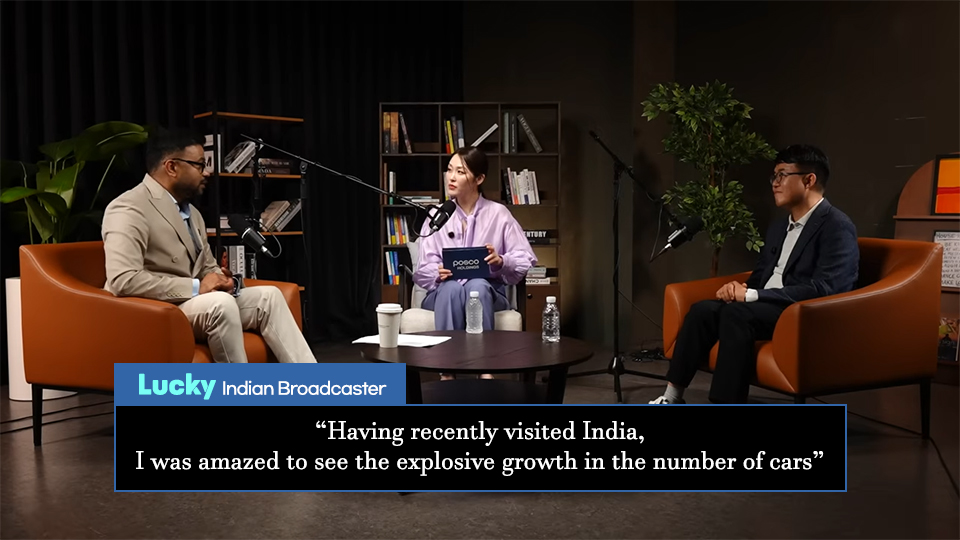
The rising purchasing power of India’s younger generation is driving development across various industries. The automotive sector, in particular, is expanding rapidly. Currently ranking fourth globally in vehicle production, India’s automotive industry is growing so fast that it is expected to climb to third place in the near future. Additionally, the home appliance market—where Korean giants like Samsung and LG have a strong presence—is seeing increased demand due to rising income levels. In the construction sector, active development of new smart cities is also driving a steady increase in steel consumption.
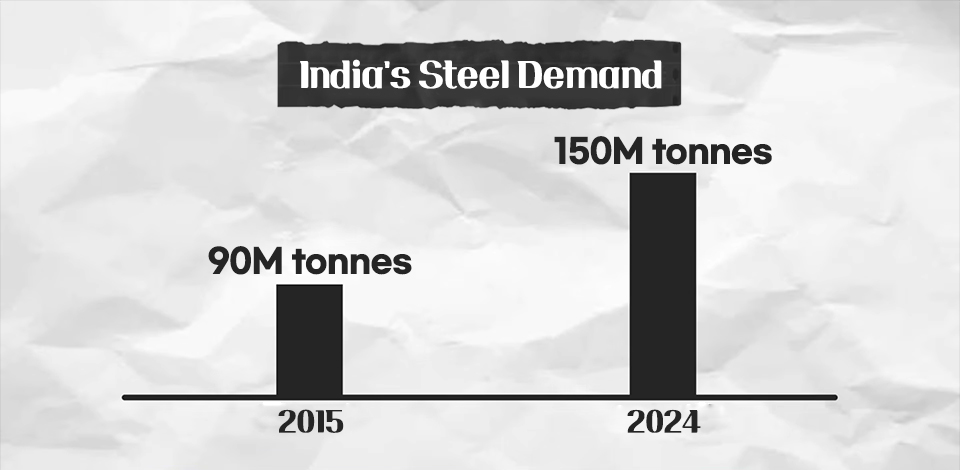
Specifically, India’s steel demand, which stood at 90 million tons in 2015, has surged to 150 million tons in 2024, and is projected to reach 260 million tons by 2035. Today, India stands as the world’s largest steel market, second only to China.
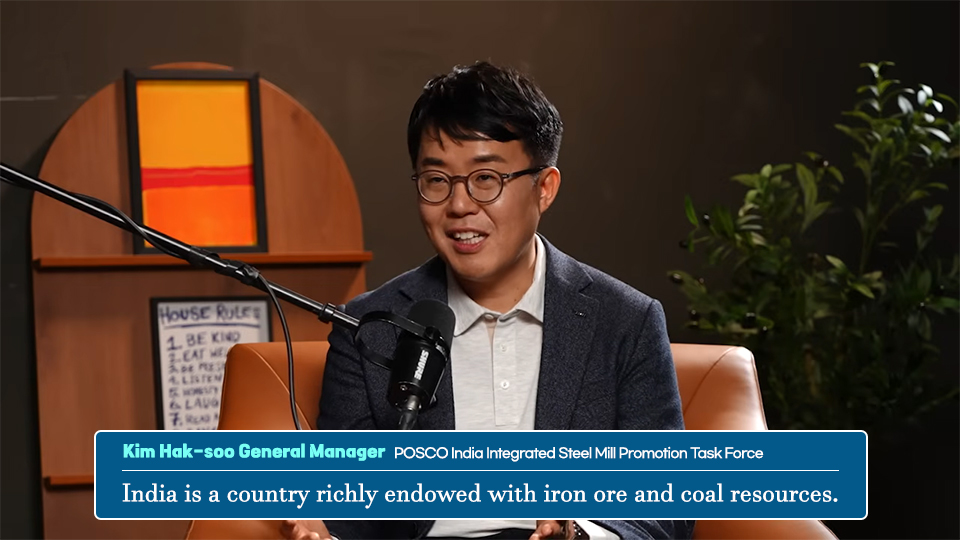
Supporting this explosive demand is India’s abundance of natural resources. India ranks seventh globally in iron ore reserves (approximately 35 billion tons) and possesses rich reserves of coking coal, offering a significant advantage in raw material procurement. This resource wealth serves as a powerful springboard for India to achieve complete self-sufficiency in the steel industry and sustain long-term growth.
To Go Far, Go Together: Why POSCO and JSW Steel Joined Forces
Why did POSCO choose to enter India through a Joint Venture (JV)? Since 2004, POSCO had explored entering India’s upstream steelmaking sector on four separate occasions. However, these attempts faced hurdles, such as finding the right partner and securing land. The Indian market proved highly challenging for foreign enterprises to navigate independently. Drawing from these experiences, POSCO concluded that partnering with a strong local player was the most viable path forward.
In this regard, JSW Steel, India’s top steelmaker, was the perfect partner. JSW Steel has demonstrated remarkable growth in a short span, scaling its crude steel production from 2.2 million tons in 2005 to over 30 million tons today.
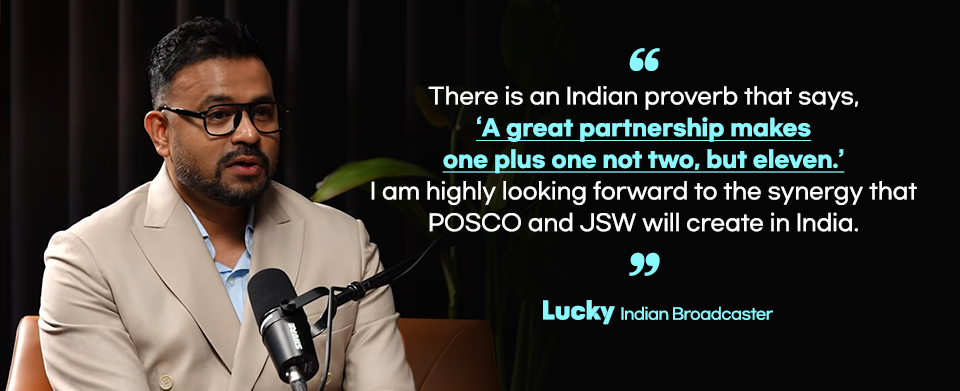
The foundation of any joint venture is trust. Reflecting this, the joint venture is structured as an equal partnership with a 50:50 shareholding split. This structure embodies a shared commitment to building the world’s finest steel mill by combining POSCO’s world-class technology with JSW Steel’s market leadership and local execution capabilities.
Amid rising global protectionism, the Indian government has also tightened measures to protect its domestic market. To safeguard its local steel industry, India has strengthened regulations on domestic production and mandated standard certifications for imported steel. Under these circumstances, the decision to form a joint venture with JSW Steel represents a proactive, strategic move to successfully navigate and establish a strong foothold in the Indian market.
There is an African proverb that says, “If you want to go fast, go alone; if you want to go far, go together.” In line with this wisdom, POSCO plans to combine its innovative steelmaking technology with JSW Group’s formidable local competitiveness, paving the way to make substantial contributions to the industrial development and economic growth of both nations.