
Investing USD 200 million jointly with U.S.-based ReElement Technologies Corporation to advance the construction of a rare earth separation and purification plant in the U.S. with an annual capacity of 6,000 tons
Securing a global supply chain connecting Southeast Asian raw materials to permanent magnet production in the U.S.
Held a signing ceremony in Washington, D.C., attended by senior U.S. government officials and representatives from the Embassy of the Republic of Korea in the U.S.
Targeting mass production in 2028 to proactively respond to the restructuring of the supply chain for critical minerals in the U.S.
POSCO INTERNATIONAL (CEO LEE Kye In) is making a full-scale entry into the U.S. market for rare earth separation and purification as well as integrated permanent magnet production.
On May 21 (local time), POSCO INTERNATIONAL signed an agreement with ReElement Technologies Corporation in Washington, D.C., to establish a joint venture for rare earth separation and purification production in the United States.
The signing ceremony was attended by POSCO INTERNATIONAL CEO LEE Kye-In, ReElement CEO Mark Jensen, senior officials from the U.S. Departments of State, Commerce, and Energy, and representatives from the Embassy of the Republic of Korea in the U.S. The agreement reaffirmed the U.S. government’s commitment to building an independent supply chain for critical minerals at the national security level, while also strengthening industrial cooperation between South Korea and the U.S.
The two companies plan to jointly invest a total of USD 200 million to build a new rare earth separation and purification plant in the U.S. with an annual capacity of 6,000 tons and establish an integrated complex for the fully integrated production of permanent magnets. POSCO INTERNATIONAL will lead the management of the joint venture as the majority shareholder, while ReElement will provide its core separation and purification technologies.
Of the total project cost of USD 200 million, USD 100 million will be allocated to plant and equipment construction and initial operating funds, while the remaining USD 100 million will be allocated for future expansion based on market demand.
Last September, the two companies signed a memorandum of understanding in the presence of officials from the Ministry of Trade, Industry and Energy to launch the “Boiler Maker Project,” which, with this agreement, has now entered the full-scale implementation stage. The project holds strategic significance for South Korea-U.S. industrial cooperation in diversifying the global rare earth supply chain, which is currently heavily concentrated in a few specific countries.
Rare earths are critical materials used in advanced industries such as electric vehicle (EV) motors, robotics, and AI data centers. In particular, heavy rare earth elements such as dysprosium (Dy) and terbium (Tb) play a vital role in the production of high-performance permanent magnets. As deposits are limited and most global production is concentrated in a few regions, supply stability is directly tied to industrial competitiveness.
Accordingly, the U.S. government is implementing various policies to strengthen domestic supply chains, including the launch of the Minerals Security Partnership (MSP) and “Project Vault,” a strategic stockpiling program for critical minerals Industry experts believe companies securing local production bases early will gain a competitive edge in the U.S. market, as the shortage of rare earth separation and purification infrastructure in the U.S. is unlikely to be resolved in the short term.
The joint venture plans to produce key raw materials for permanent magnets, including neodymium (Nd) and praseodymium (Pr) oxides, as well as heavy rare earth oxides such as dysprosium (Dy) and terbium (Tb), and later expand into permanent magnet manufacturing using these materials. In the first phase, the joint venture will establish a production system with an annual capacity of 3,000 tons, followed by a second-phase expansion to increase capacity to 6,000 tons annually. Following pilot production in the fourth quarter of 2027, the companies will begin full-scale mass production in 2028.
This investment by POSCO INTERNATIONAL is expected to go beyond the establishment of a separation and purification plant and serve as a key foundation for building an integrated value chain spanning raw material procurement, separation and purification, permanent magnet production, and EV traction motor core manufacturing. In addition to pursuing investments in Southeast Asian mines to secure additional raw material sources, the company is also operating a joint raw materials task force with ReElement for management of domestic and overseas mining resources as well as recycled materials, while reviewing plans to further expand the supply chain.
“This joint venture goes beyond the establishment of a simple purification plant and marks the starting point for building a critical minerals value chain in the U.S., spanning from raw materials to final materials,” said POSCO INTERNATIONAL CEO LEE Kye In. “The combination of the two companies’ global supply chain capabilities and innovative separation and purification technologies will create significant synergy.”
ReElement CEO Mark Jensen said, “By combining ReElement’s separation and purification platform with POSCO INTERNATIONAL’s global capabilities and industrial scale, we will build an integrated production system that addresses supply chain gaps in the market,” adding, “Both companies will work together to establish a stable supply chain that supports national security, clean energy, and next-generation advanced technologies.”
Since POSCO HOLDINGS CEO CHANG In Hwa took office, the POSCO group has been strengthening supply chain stability and enhancing its competitiveness in the materials market by proactively securing high-quality global resources in critical minerals sectors, including rare earths and battery materials. In April, POSCO Holdings consecutively signed an agreement to acquire lithium brine mining rights in Argentina and another agreement to invest in a lithium mine in Australia.
Meanwhile, ReElement Technologies Corporation, an affiliate of NASDAQ-listed American Resources Corporation (NASDAQ: AREC), is a leading company in the rare earth and critical minerals separation and purification sector. Based on its proprietary separation and purification process, the company converts a wide range of raw materials, including recycled materials recovered from permanent magnets, lithium-ion batteries, and industrial, defense, and technology waste, as well as ores, brine, and coal by-products, into high-purity products. Through this process, the company supports the development of a circular supply chain that balances economic efficiency with environmental sustainability.
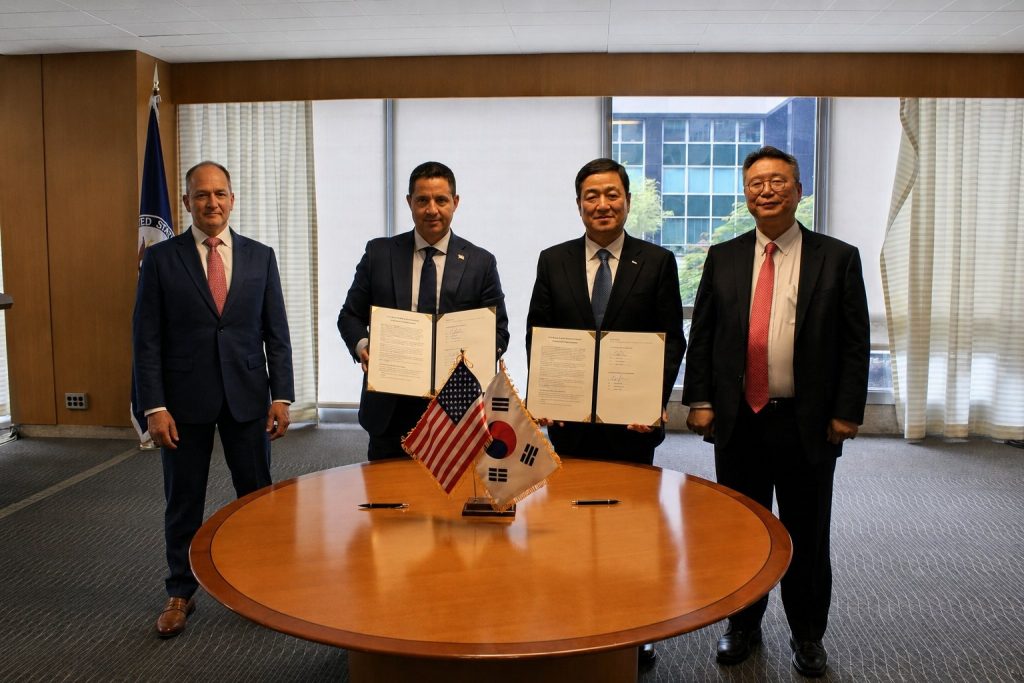
▲ (From left) Mike Kopp, Senior Advisor to the U.S. Secretary of Energy; Mark Jensen, CEO of ReElement; LEE Kye In, President & CEO of POSCO International; and PARK Chan-Ki, Commercial Attaché at the Embassy of the Republic of Korea in the United States.
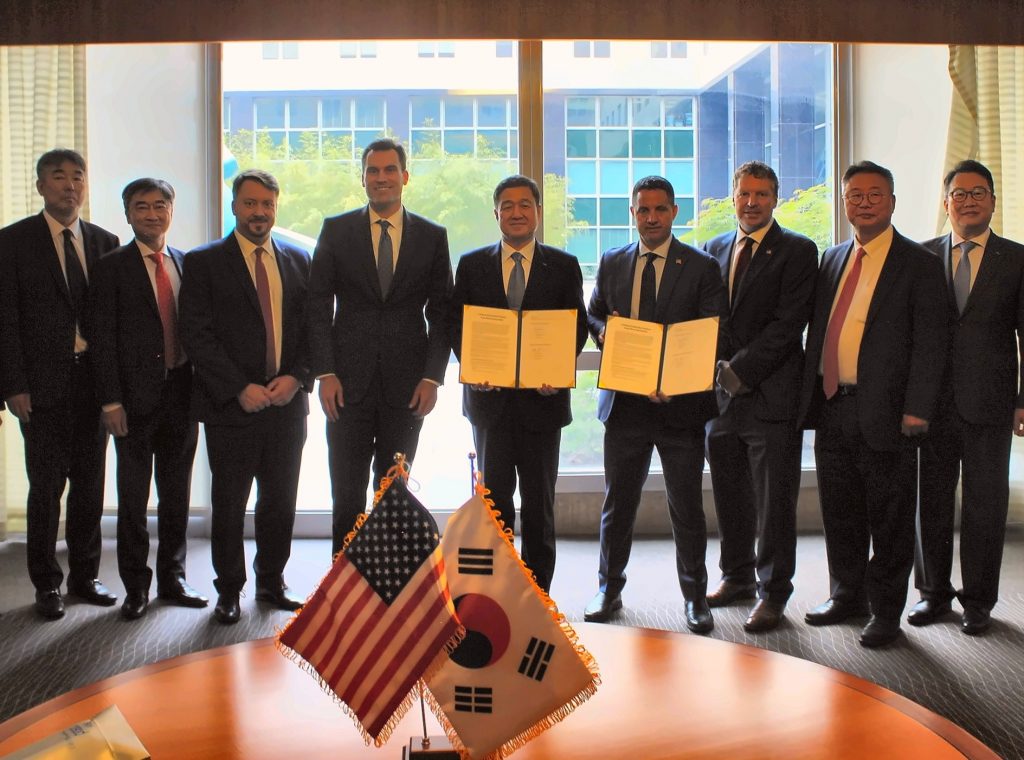
▲ (From left) SEO Yong Deok, Head of POSCO International’s North America Region; LEE Kyung Jin, Head of the Steel Business Division; Joshua Kroon, Deputy Assistant Secretary at the U.S. Department of Commerce; William Kimmitt, Under Secretary for International Trade at the U.S. Department of Commerce; LEE Kye In, President & CEO of POSCO International; Mark Jensen, CEO of ReElement; Shane Tragethon, Vice President of International Strategy at ReElement; PARK Chan-Ki, Commercial Attaché at the Embassy of the Republic of Korea in the United States; and KIM Kyung-Chan, CEO of POSCO-America.